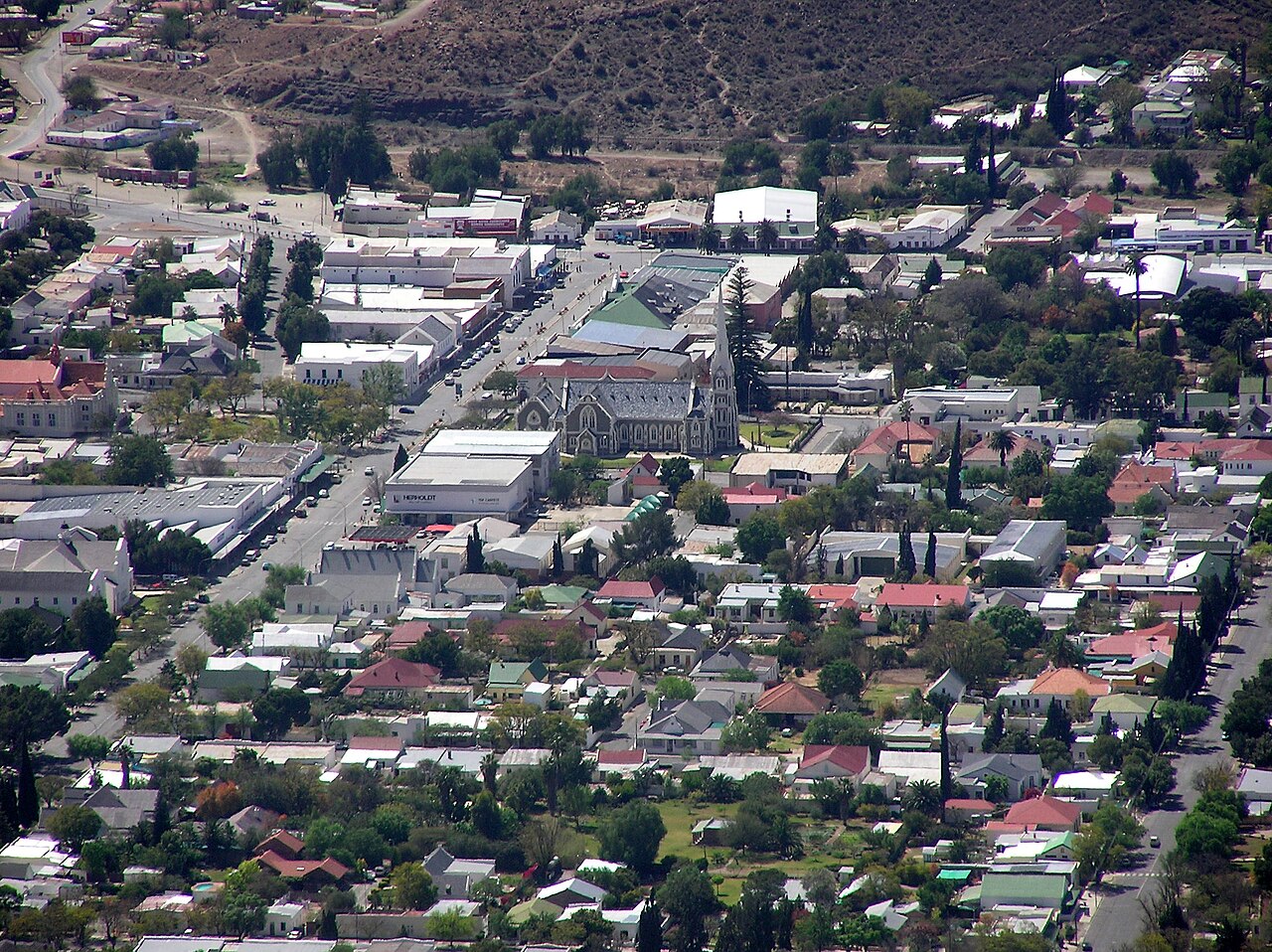
A town is a machine for holding people close together. While the reason for the closeness lasts, the town grows without effort. When the reason goes, the town does not shrink gracefully. It empties.
South Africa carries hundreds of these places: a wide main road, a church, a co-op, a hotel, and a population that halves with each generation. People call them wastelands. They are better understood as the tail of a distribution working exactly as it should.
What agglomeration means
Alfred Marshall gave the classic account in 1890, and his three reasons still hold. Firms in one place share suppliers, so a toolmaker can serve twenty workshops instead of one. Workers gather where the jobs are, which lets an employer hire without moving the town. Knowledge moves in the pub, the church and the factory floor, faster than any document.
Each reason strengthens the other two. A deeper labour pool attracts more firms, more firms deepen the pool, and the town pulls ahead of a neighbour that started with the same population.
This is why success compounds, and why failure does. A town on the wrong side of the threshold loses its bank branch, then its doctor, then its school, then the families whose children need both.
The through-traffic economy
Many small towns existed because travel was slow. A car needed fuel, a family needed a meal, and a driver needed a bed before the next stretch of nothing. Every stop created work: the garage, the cafe, the hotel, the shop that sold sweets and tyres.
Faster cars, better roads and bigger fuel tanks removed the stop. The road still passes through town, which makes the change crueller: the traffic is visible and the money no longer stays.
Freight moved the same way. Rail carried goods to a station and a goods shed; deregulation and road haulage moved the load to a truck that never stops. The station closed, the shed went quiet, and the hotel lost its commercial guests.
What else removed the base
Through traffic is one thread. Three others pull in the same direction.
- Farm mechanisation. A farm that once employed thirty people employs three and a machine. The wages left the district and the school roll fell with them.
- Retail consolidation. One regional mall, a town further along the road, absorbs the weekly shop for a whole district. The small town keeps a spaza and a bottle store.
- Service centralisation. Hospitals, courts, banks and government offices concentrate where the population already is, which removes another reason to stay.
None of these is a scandal. Each is an efficiency gain that a consumer enjoys and a town pays for.
Zipf’s law and the long tail
City populations follow a rank-size pattern that George Zipf described in the 1940s. Rank the cities in a country by population and the largest tends to be about twice the size of the second, three times the third, and so on down the list.
The rule is an empirical tendency, not a law of physics, and plenty of countries deviate. It still captures something true: the same force that builds a metropolis thins the tail. Growth at the top and decline at the bottom are one process, not two.
That matters for policy. A country cannot keep every town at its 1960 population any more than it can keep every job in farming. The question is what the tail should look like.
The boomtown trap
A town with one industry is a bet on that industry. A mine, a factory or a border post can carry a place for decades, and then the ore runs out, the owner moves production, or the border opens somewhere else.
Saudi Arabia and the United Arab Emirates diversify for the same reason a town should. One export is one customer, one price and one decision made elsewhere. Diversification is expensive and often fails, but it is the only version of the bet that survives a bad decade.
The uncomfortable corollary: a town that depends on a single employer is living on borrowed time, and the loan comes due without warning.
Why London and New York keep going
Large cities hold a portfolio. London carries finance, law, media, software, tourism and education; New York carries finance, media, software, fashion and logistics. When one sector sheds jobs, another absorbs the people, because the skills overlap and the pool is deep.
Both cities have lost industries and both have replaced them. The replacement works because a broad labour market lets a dismissed analyst become a founder, and because the cost of leaving rises as the network thickens: the schools, the restaurants, the friends, the spouse’s job.
That lock-in is real, and it is also the point. A city with options keeps its people through a downturn. A town with one option loses them in a season.
What a small town can do
Three levers exist, in order of durability.
- An anchor employer that exports something. Montego Pet Nutrition in Graaff-Reinet sells food to the rest of the country, which brings outside money into the town and pays local wages with it.
- A reason for outsiders to arrive. A trail, a park, a festival or a landmark converts passing traffic into spending.
- Remote work. A salary earned elsewhere and spent locally is an export in everything but name, and fibre makes it possible.
None of these reverses Zipf’s law. They raise the floor, buy time and give the next generation a reason to stay one more year.
The honest question
Economic geography sets a strong prior, and a town can still change its outcome at the margin. The useful question is not “how do we become a city”. It is “what can we sell to people who live somewhere else”, because that is the only money that arrives from outside.
A town that answers that question has a future, even if it is smaller than the past. A town that waits for the traffic to come back has neither.
Header photo: Graaff-Reinet by Winfried Bruenken (Amrum), CC BY-SA 2.5, via Wikimedia Commons.